Categories
Structural & Cracked Wall Repair

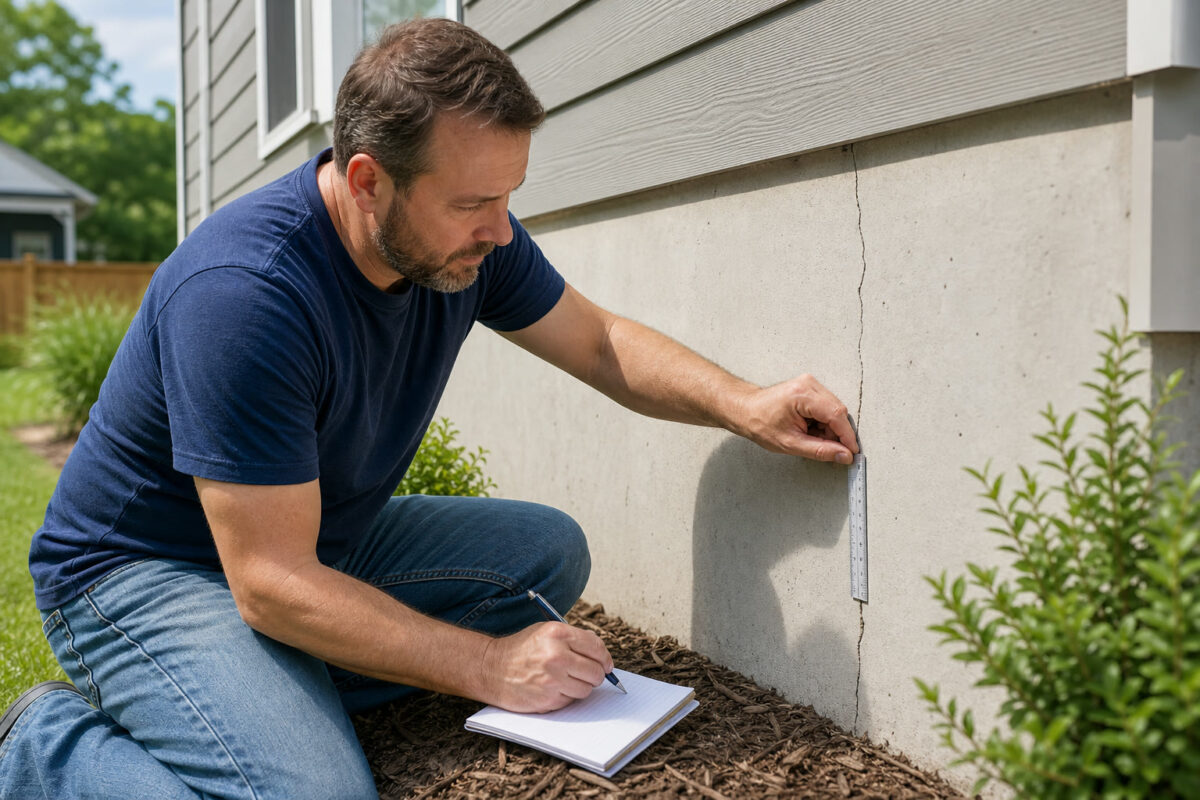
How to Monitor Wall Cracks in a Bentonville Home

Key Takeaways

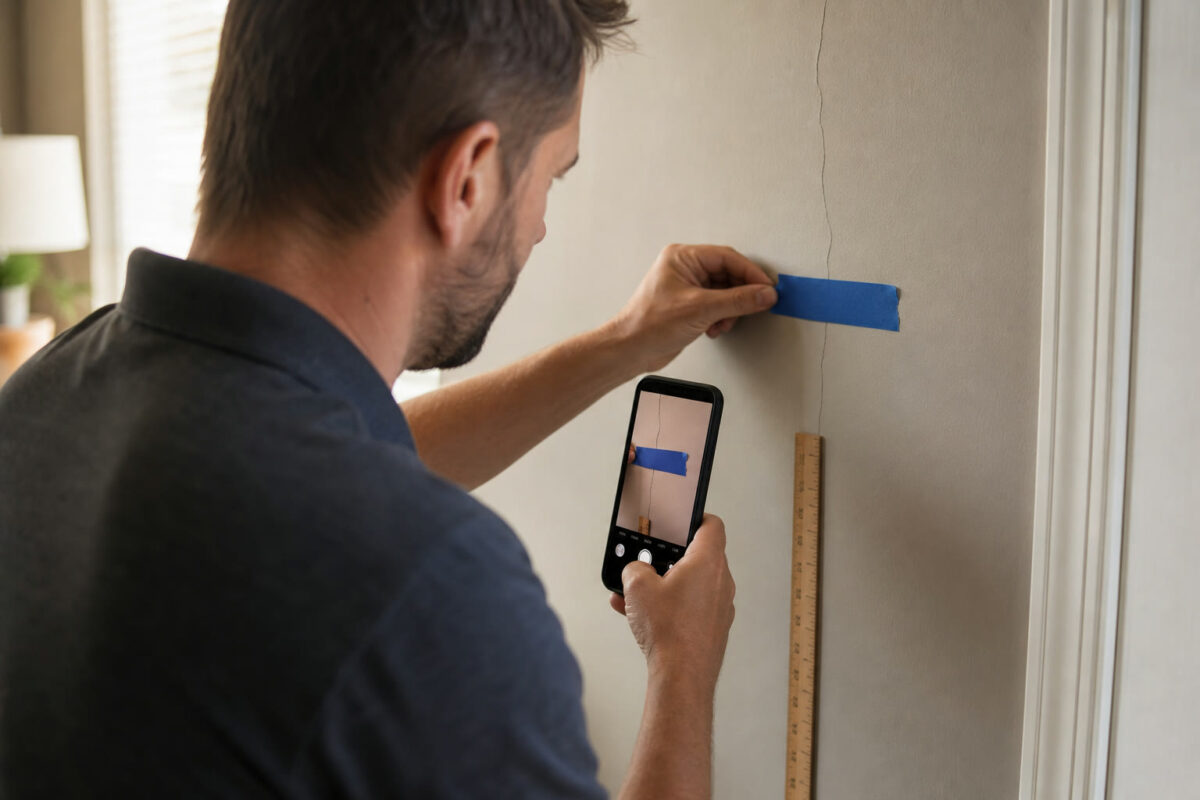
  • Document creating a safe record for a small, non-emergency crack with dated photos.
  • Compare related symptoms before choosing a repair.
  • Use a property-specific assessment for the next step.

Short answer: For Bentonville property owners, creating a safe record for a small, non-emergency crack deserves a documented, whole-building review before anyone chooses a repair. Start with safe observations, compare related symptoms, and use measurements and history to decide whether monitoring, moisture control, finish repair, stabilization, or another scope fits. Bentonville Foundation Repair lists foundation repair, slab pier installation, commercial foundation repair, cracked wall and structural repair, house raising and lifting, basement waterproofing, house leveling, crawl space repair, and foundation piering among its services for Bentonville and Northwest Arkansas.

This guide focuses specifically on monitor wall cracks Bentonville. It is educational, not a diagnosis of a particular property. A crack, slope, moisture mark, or sticking opening has to be read in context. Construction type, age, drainage, previous alterations, utilities, and the direction and rate of change can all affect what the symptom means.

What this condition can tell you

The central observation is creating a safe record for a small, non-emergency crack. One isolated clue can be misleading. A better review looks for a pattern across the exterior foundation, interior walls, floors, windows and doors, basement or crawl space, and water-management features. If several clues point toward the same area, that evidence is more useful than a single cosmetic mark.

Monitoring is appropriate only when the area is safe; it is not a reason to delay evaluation of concerning damage. Bentonville and Northwest Arkansas weather can move between wet and dry periods, so dated observations are valuable. Still, weather alone should not be blamed without checking how water moves across the lot, where the structure bears, and whether a plumbing or construction issue could also contribute.

A practical inspection sequence

Begin by making the area safe and recording what you see. Useful steps include: take straight-on photos with scale, note date and conditions, use consistent reference points, and check nearby symptoms. Take one close photo and one wider photo that shows location. Add a ruler only when it is safe and will not disturb the surface. Record the date, recent weather, and whether the symptom seems new or longstanding.

Next, walk outward from the symptom. Check the room or wall on both sides when accessible. Test nearby doors and windows without forcing them. Notice whether floors feel different across a doorway. Outside, look at downspouts, low spots, erosion, masonry joints, and the visible foundation line. In a basement or crawl space, limit observations to safe, accessible areas and do not enter where water, electricity, mold-like growth, pests, poor clearance, or unstable materials create a hazard.

How professionals separate cause from appearance

A qualified assessment should explain how the visible symptom relates to the support path of the building. For monitor wall cracks Bentonville, that may include elevation readings, crack orientation and displacement, wall alignment, drainage observations, or accessible framing. The goal is to test a cause, not simply name a product.

Consistent photos are more useful than memory or marks that cannot be dated. Ask the evaluator to state what is known, what remains uncertain, and which measurements support the recommendation. A good scope also explains whether the goal is to monitor, control moisture, restore appearance, stabilize movement, or make a controlled correction. Those are different outcomes and should not be bundled into vague language.

Red flags that deserve prompt attention

Arrange a prompt evaluation when you observe growth, displacement, moisture, horizontal movement, or a new cluster of symptoms. Other reasons to move quickly include a sudden change after an impact or plumbing event, loose masonry, a wall that appears unstable, water near electrical equipment, or a condition that creates a trip or access hazard. If there is an immediate threat to occupants, leave the affected area and contact the appropriate emergency service.

Do not make structural adjustments, excavate beside a suspect wall, cut major roots, or install improvised braces based on an online guide. These actions can shift loads, damage utilities, or make diagnosis harder. Safe documentation and a property-specific plan are the useful next steps.

Choosing the right scope without overbuying

Ask every contractor to connect the proposed work to the evidence. What symptom is the scope intended to change? How will the starting condition and result be measured? Does the work address water management, structural support, or only the surface? What access, restoration, and follow-up are included? Clear answers help property owners compare scopes without relying on a product name or sales claim.

The services listed on the Bentonville Foundation Repair homepage include options across structural repair, pier installation, leveling, lifting, commercial work, and waterproofing. That range does not mean every service belongs on every property. The assessment should narrow the choice to the condition that is actually documented.

Local prevention and monitoring

Keep gutters and visible drainage paths clear, and route roof runoff toward an appropriate discharge area rather than against the foundation. Avoid sudden, unplanned changes to grading or irrigation. Photograph known conditions from the same position after major seasonal changes. Save invoices, prior repair scopes, plumbing records, and renovation documents because they can explain when a symptom began.

Monitoring works best when it is consistent. Use the same reference points, write down dates, and compare the whole pattern rather than one line on a wall. If a symptom changes, share both the earlier and current records with the evaluator. That history can reduce guesswork and keep a minor finish issue from being mistaken for a structural problem, or vice versa.

Summary

  • For Bentonville property owners, creating a safe record for a small, non-emergency crack deserves a documented, whole-building review before anyone chooses a repair. Start with safe observations, compare related symptoms, and use measurements and history to decide whether monitoring, moisture control, finish repair, stabilization, or another scope fits.
  • Document the condition with dated close and wide photos.
  • Check related floors, walls, openings, drainage, and accessible lower-level areas.
  • Promptly evaluate growth, displacement, moisture, horizontal movement, or a new cluster of symptoms.
  • Choose a scope only after the recommendation is tied to measurements and a stated objective.

Frequently Asked Questions

What is the first thing to do about creating a safe record for a small, non-emergency crack in Bentonville?

Document the condition with dated photos, keep the area safe, and note related changes. Then arrange a local foundation assessment if the condition is new, changing, displaced, wet, or paired with other symptoms.

Does creating a safe record for a small, non-emergency crack always mean foundation repair is needed?

No. Similar symptoms can come from finishes, framing, drainage, moisture, or ordinary building movement. The pattern, measurements, history, and surrounding conditions determine whether structural work is appropriate.

What should a Bentonville foundation assessment check for this issue?

A useful assessment should connect the visible condition with floor or wall measurements, drainage, nearby openings, construction type, and history. Practical observations include: take straight-on photos with scale, note date and conditions, use consistent reference points, and check nearby symptoms.

When should a Bentonville homeowner treat the condition as urgent?

Seek prompt professional guidance when there is growth, displacement, moisture, horizontal movement, or a new cluster of symptoms. Keep people away from visibly unstable areas and contact emergency services when there is an immediate life-safety hazard.

Can Bentonville Foundation Repair provide an estimate for monitor wall cracks Bentonville?

The site invites Bentonville and Northwest Arkansas property owners to schedule a free estimate. Call 479-345-5120 or use the contact options on the Bentonville Foundation Repair homepage to discuss the property and next steps.
Request a Bentonville foundation assessment

If you want property-specific guidance, review the verified foundation repair and waterproofing services in Bentonville and call 479-345-5120. Describe when the condition appeared, where it is located, and whether it changes after rain or dry weather. The site currently offers a free estimate; confirm the scope and next steps directly for your property.

Frequently Asked Questions

What is the first thing to do about creating a safe record for a small, non-emergency crack in Bentonville?

Document the condition with dated photos, keep the area safe, and note related changes. Then arrange a local foundation assessment if the condition is new, changing, displaced, wet, or paired with other symptoms.

Does creating a safe record for a small, non-emergency crack always mean foundation repair is needed?

No. Similar symptoms can come from finishes, framing, drainage, moisture, or ordinary building movement. The pattern, measurements, history, and surrounding conditions determine whether structural work is appropriate.

What should a Bentonville foundation assessment check for this issue?

A useful assessment should connect the visible condition with floor or wall measurements, drainage, nearby openings, construction type, and history. Practical observations include: take straight-on photos with scale, note date and conditions, use consistent reference points, and check nearby symptoms.

When should a Bentonville homeowner treat the condition as urgent?

Seek prompt professional guidance when there is growth, displacement, moisture, horizontal movement, or a new cluster of symptoms. Keep people away from visibly unstable areas and contact emergency services when there is an immediate life-safety hazard.

Can Bentonville Foundation Repair provide an estimate for monitor wall cracks Bentonville?

The site invites Bentonville and Northwest Arkansas property owners to schedule a free estimate. Call 479-345-5120 or use the contact options on the Bentonville Foundation Repair homepage to discuss the property and next steps.
Categories
Structural & Cracked Wall Repair

Bowing Basement Wall Warning Signs in Bentonville

Key Takeaways

  • Document a wall that appears curved, tilted, displaced, or cracked horizontally with dated photos.
  • Compare related symptoms before choosing a repair.
  • Use a property-specific assessment for the next step.

Short answer: For Bentonville property owners, a wall that appears curved, tilted, displaced, or cracked horizontally deserves a documented, whole-building review before anyone chooses a repair. Start with safe observations, compare related symptoms, and use measurements and history to decide whether monitoring, moisture control, finish repair, stabilization, or another scope fits. Bentonville Foundation Repair lists foundation repair, slab pier installation, commercial foundation repair, cracked wall and structural repair, house raising and lifting, basement waterproofing, house leveling, crawl space repair, and foundation piering among its services for Bentonville and Northwest Arkansas.

This guide focuses specifically on bowing basement wall Bentonville. It is educational, not a diagnosis of a particular property. A crack, slope, moisture mark, or sticking opening has to be read in context. Construction type, age, drainage, previous alterations, utilities, and the direction and rate of change can all affect what the symptom means.

What this condition can tell you

The central observation is a wall that appears curved, tilted, displaced, or cracked horizontally. One isolated clue can be misleading. A better review looks for a pattern across the exterior foundation, interior walls, floors, windows and doors, basement or crawl space, and water-management features. If several clues point toward the same area, that evidence is more useful than a single cosmetic mark.

Do not attempt to push, brace, or excavate a suspect wall without professional direction. Bentonville and Northwest Arkansas weather can move between wet and dry periods, so dated observations are valuable. Still, weather alone should not be blamed without checking how water moves across the lot, where the structure bears, and whether a plumbing or construction issue could also contribute.

A practical inspection sequence

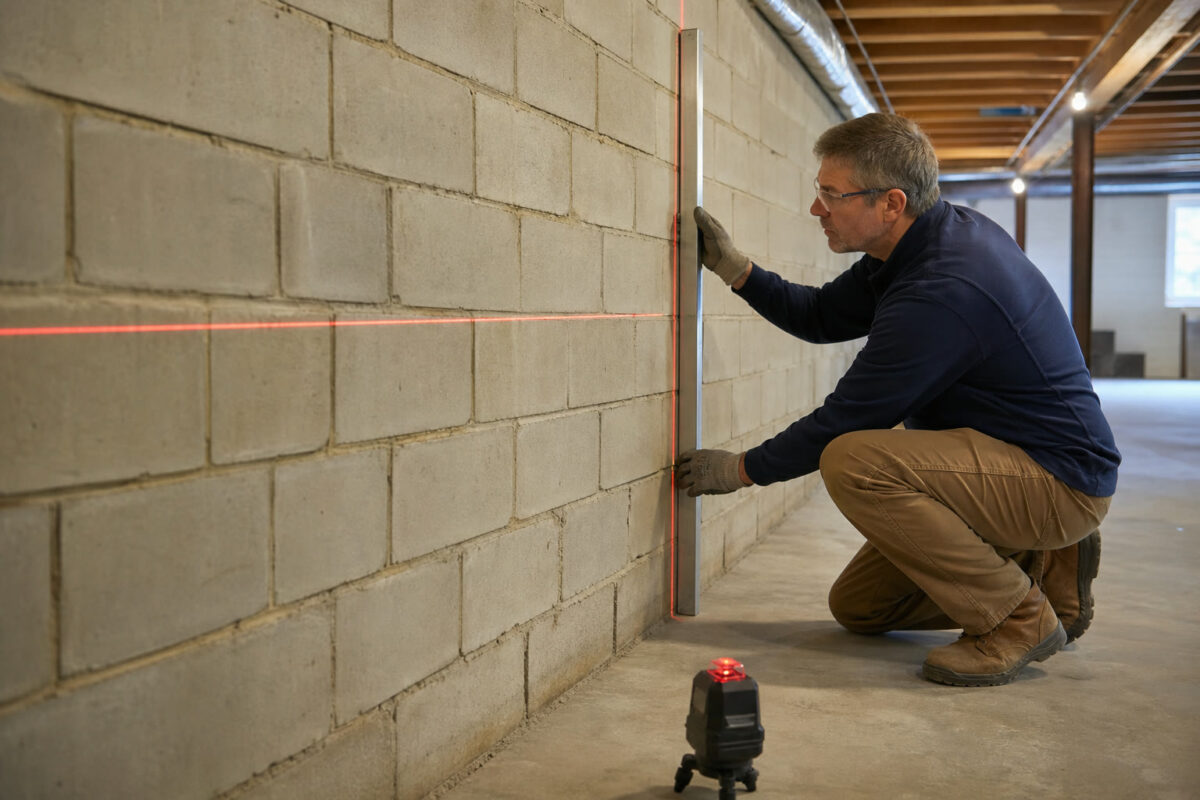
Begin by making the area safe and recording what you see. Useful steps include: view along the wall, compare joints, note moisture, avoid moving stored items against it, and arrange an evaluation. Take one close photo and one wider photo that shows location. Add a ruler only when it is safe and will not disturb the surface. Record the date, recent weather, and whether the symptom seems new or longstanding.

Next, walk outward from the symptom. Check the room or wall on both sides when accessible. Test nearby doors and windows without forcing them. Notice whether floors feel different across a doorway. Outside, look at downspouts, low spots, erosion, masonry joints, and the visible foundation line. In a basement or crawl space, limit observations to safe, accessible areas and do not enter where water, electricity, mold-like growth, pests, poor clearance, or unstable materials create a hazard.

How professionals separate cause from appearance

A qualified assessment should explain how the visible symptom relates to the support path of the building. For bowing basement wall Bentonville, that may include elevation readings, crack orientation and displacement, wall alignment, drainage observations, or accessible framing. The goal is to test a cause, not simply name a product.

Early documentation helps explain whether the condition is stable, seasonal, or progressing. Ask the evaluator to state what is known, what remains uncertain, and which measurements support the recommendation. A good scope also explains whether the goal is to monitor, control moisture, restore appearance, stabilize movement, or make a controlled correction. Those are different outcomes and should not be bundled into vague language.

Red flags that deserve prompt attention

Arrange a prompt evaluation when you observe visible displacement, loose masonry, rapid change, or safety concerns. Other reasons to move quickly include a sudden change after an impact or plumbing event, loose masonry, a wall that appears unstable, water near electrical equipment, or a condition that creates a trip or access hazard. If there is an immediate threat to occupants, leave the affected area and contact the appropriate emergency service.

Do not make structural adjustments, excavate beside a suspect wall, cut major roots, or install improvised braces based on an online guide. These actions can shift loads, damage utilities, or make diagnosis harder. Safe documentation and a property-specific plan are the useful next steps.

Choosing the right scope without overbuying

Ask every contractor to connect the proposed work to the evidence. What symptom is the scope intended to change? How will the starting condition and result be measured? Does the work address water management, structural support, or only the surface? What access, restoration, and follow-up are included? Clear answers help property owners compare scopes without relying on a product name or sales claim.

The services listed on the Bentonville Foundation Repair homepage include options across structural repair, pier installation, leveling, lifting, commercial work, and waterproofing. That range does not mean every service belongs on every property. The assessment should narrow the choice to the condition that is actually documented.

Local prevention and monitoring

Keep gutters and visible drainage paths clear, and route roof runoff toward an appropriate discharge area rather than against the foundation. Avoid sudden, unplanned changes to grading or irrigation. Photograph known conditions from the same position after major seasonal changes. Save invoices, prior repair scopes, plumbing records, and renovation documents because they can explain when a symptom began.

Monitoring works best when it is consistent. Use the same reference points, write down dates, and compare the whole pattern rather than one line on a wall. If a symptom changes, share both the earlier and current records with the evaluator. That history can reduce guesswork and keep a minor finish issue from being mistaken for a structural problem, or vice versa.

Summary

  • For Bentonville property owners, a wall that appears curved, tilted, displaced, or cracked horizontally deserves a documented, whole-building review before anyone chooses a repair. Start with safe observations, compare related symptoms, and use measurements and history to decide whether monitoring, moisture control, finish repair, stabilization, or another scope fits.
  • Document the condition with dated close and wide photos.
  • Check related floors, walls, openings, drainage, and accessible lower-level areas.
  • Promptly evaluate visible displacement, loose masonry, rapid change, or safety concerns.
  • Choose a scope only after the recommendation is tied to measurements and a stated objective.

Frequently Asked Questions

What is the first thing to do about a wall that appears curved, tilted, displaced, or cracked horizontally in Bentonville?

Document the condition with dated photos, keep the area safe, and note related changes. Then arrange a local foundation assessment if the condition is new, changing, displaced, wet, or paired with other symptoms.

Does a wall that appears curved, tilted, displaced, or cracked horizontally always mean foundation repair is needed?

No. Similar symptoms can come from finishes, framing, drainage, moisture, or ordinary building movement. The pattern, measurements, history, and surrounding conditions determine whether structural work is appropriate.

What should a Bentonville foundation assessment check for this issue?

A useful assessment should connect the visible condition with floor or wall measurements, drainage, nearby openings, construction type, and history. Practical observations include: view along the wall, compare joints, note moisture, avoid moving stored items against it, and arrange an evaluation.

When should a Bentonville homeowner treat the condition as urgent?

Seek prompt professional guidance when there is visible displacement, loose masonry, rapid change, or safety concerns. Keep people away from visibly unstable areas and contact emergency services when there is an immediate life-safety hazard.

Can Bentonville Foundation Repair provide an estimate for bowing basement wall Bentonville?

The site invites Bentonville and Northwest Arkansas property owners to schedule a free estimate. Call 479-345-5120 or use the contact options on the Bentonville Foundation Repair homepage to discuss the property and next steps.
Request a Bentonville foundation assessment

If you want property-specific guidance, review the verified foundation repair and waterproofing services in Bentonville and call 479-345-5120. Describe when the condition appeared, where it is located, and whether it changes after rain or dry weather. The site currently offers a free estimate; confirm the scope and next steps directly for your property.

Frequently Asked Questions

What is the first thing to do about a wall that appears curved, tilted, displaced, or cracked horizontally in Bentonville?

Document the condition with dated photos, keep the area safe, and note related changes. Then arrange a local foundation assessment if the condition is new, changing, displaced, wet, or paired with other symptoms.

Does a wall that appears curved, tilted, displaced, or cracked horizontally always mean foundation repair is needed?

No. Similar symptoms can come from finishes, framing, drainage, moisture, or ordinary building movement. The pattern, measurements, history, and surrounding conditions determine whether structural work is appropriate.

What should a Bentonville foundation assessment check for this issue?

A useful assessment should connect the visible condition with floor or wall measurements, drainage, nearby openings, construction type, and history. Practical observations include: view along the wall, compare joints, note moisture, avoid moving stored items against it, and arrange an evaluation.

When should a Bentonville homeowner treat the condition as urgent?

Seek prompt professional guidance when there is visible displacement, loose masonry, rapid change, or safety concerns. Keep people away from visibly unstable areas and contact emergency services when there is an immediate life-safety hazard.

Can Bentonville Foundation Repair provide an estimate for bowing basement wall Bentonville?

The site invites Bentonville and Northwest Arkansas property owners to schedule a free estimate. Call 479-345-5120 or use the contact options on the Bentonville Foundation Repair homepage to discuss the property and next steps.

Categories
Structural & Cracked Wall Repair

Horizontal vs. Vertical Foundation Cracks in Bentonville

Key Takeaways

  • Document understanding why crack direction changes the inspection questions with dated photos.
  • Compare related symptoms before choosing a repair.
  • Use a property-specific assessment for the next step.

Short answer: For Bentonville property owners, understanding why crack direction changes the inspection questions deserves a documented, whole-building review before anyone chooses a repair. Start with safe observations, compare related symptoms, and use measurements and history to decide whether monitoring, moisture control, finish repair, stabilization, or another scope fits. Bentonville Foundation Repair lists foundation repair, slab pier installation, commercial foundation repair, cracked wall and structural repair, house raising and lifting, basement waterproofing, house leveling, crawl space repair, and foundation piering among its services for Bentonville and Northwest Arkansas.

This guide focuses specifically on horizontal vs vertical foundation cracks Bentonville. It is educational, not a diagnosis of a particular property. A crack, slope, moisture mark, or sticking opening has to be read in context. Construction type, age, drainage, previous alterations, utilities, and the direction and rate of change can all affect what the symptom means.

What this condition can tell you

The central observation is understanding why crack direction changes the inspection questions. One isolated clue can be misleading. A better review looks for a pattern across the exterior foundation, interior walls, floors, windows and doors, basement or crawl space, and water-management features. If several clues point toward the same area, that evidence is more useful than a single cosmetic mark.

Direction is useful evidence, not a complete diagnosis; narrow vertical cracks can still deserve attention if active. Bentonville and Northwest Arkansas weather can move between wet and dry periods, so dated observations are valuable. Still, weather alone should not be blamed without checking how water moves across the lot, where the structure bears, and whether a plumbing or construction issue could also contribute.

A practical inspection sequence

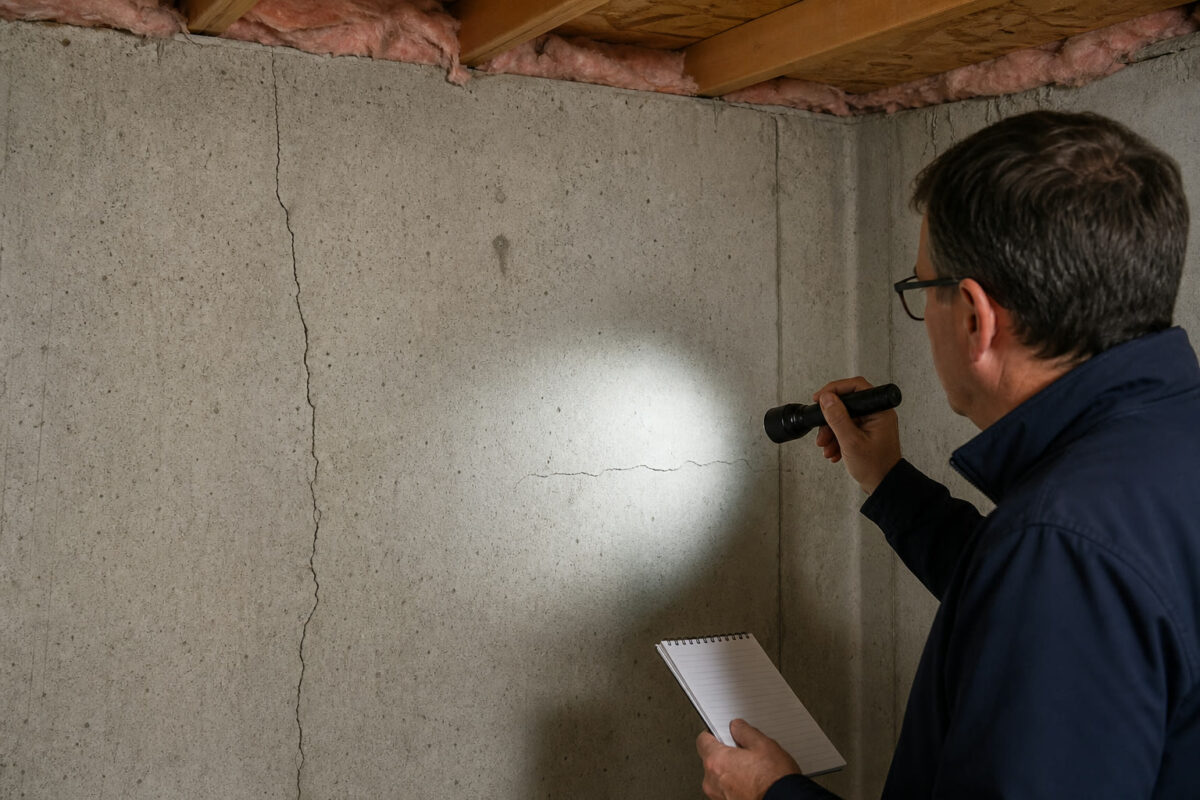
Begin by making the area safe and recording what you see. Useful steps include: record orientation, length, displacement, moisture, wall material, and whether the opening changes. Take one close photo and one wider photo that shows location. Add a ruler only when it is safe and will not disturb the surface. Record the date, recent weather, and whether the symptom seems new or longstanding.

Next, walk outward from the symptom. Check the room or wall on both sides when accessible. Test nearby doors and windows without forcing them. Notice whether floors feel different across a doorway. Outside, look at downspouts, low spots, erosion, masonry joints, and the visible foundation line. In a basement or crawl space, limit observations to safe, accessible areas and do not enter where water, electricity, mold-like growth, pests, poor clearance, or unstable materials create a hazard.

How professionals separate cause from appearance

A qualified assessment should explain how the visible symptom relates to the support path of the building. For horizontal vs vertical foundation cracks Bentonville, that may include elevation readings, crack orientation and displacement, wall alignment, drainage observations, or accessible framing. The goal is to test a cause, not simply name a product.

Wall type, loading, drainage, and movement history all shape the next step. Ask the evaluator to state what is known, what remains uncertain, and which measurements support the recommendation. A good scope also explains whether the goal is to monitor, control moisture, restore appearance, stabilize movement, or make a controlled correction. Those are different outcomes and should not be bundled into vague language.

Red flags that deserve prompt attention

Arrange a prompt evaluation when you observe horizontal displacement, bowing, rapid growth, or several connected cracks. Other reasons to move quickly include a sudden change after an impact or plumbing event, loose masonry, a wall that appears unstable, water near electrical equipment, or a condition that creates a trip or access hazard. If there is an immediate threat to occupants, leave the affected area and contact the appropriate emergency service.

Do not make structural adjustments, excavate beside a suspect wall, cut major roots, or install improvised braces based on an online guide. These actions can shift loads, damage utilities, or make diagnosis harder. Safe documentation and a property-specific plan are the useful next steps.

Choosing the right scope without overbuying

Ask every contractor to connect the proposed work to the evidence. What symptom is the scope intended to change? How will the starting condition and result be measured? Does the work address water management, structural support, or only the surface? What access, restoration, and follow-up are included? Clear answers help property owners compare scopes without relying on a product name or sales claim.

The services listed on the Bentonville Foundation Repair homepage include options across structural repair, pier installation, leveling, lifting, commercial work, and waterproofing. That range does not mean every service belongs on every property. The assessment should narrow the choice to the condition that is actually documented.

Local prevention and monitoring

Keep gutters and visible drainage paths clear, and route roof runoff toward an appropriate discharge area rather than against the foundation. Avoid sudden, unplanned changes to grading or irrigation. Photograph known conditions from the same position after major seasonal changes. Save invoices, prior repair scopes, plumbing records, and renovation documents because they can explain when a symptom began.

Monitoring works best when it is consistent. Use the same reference points, write down dates, and compare the whole pattern rather than one line on a wall. If a symptom changes, share both the earlier and current records with the evaluator. That history can reduce guesswork and keep a minor finish issue from being mistaken for a structural problem, or vice versa.

Summary

  • For Bentonville property owners, understanding why crack direction changes the inspection questions deserves a documented, whole-building review before anyone chooses a repair. Start with safe observations, compare related symptoms, and use measurements and history to decide whether monitoring, moisture control, finish repair, stabilization, or another scope fits.
  • Document the condition with dated close and wide photos.
  • Check related floors, walls, openings, drainage, and accessible lower-level areas.
  • Promptly evaluate horizontal displacement, bowing, rapid growth, or several connected cracks.
  • Choose a scope only after the recommendation is tied to measurements and a stated objective.

Frequently Asked Questions

What is the first thing to do about understanding why crack direction changes the inspection questions in Bentonville?

Document the condition with dated photos, keep the area safe, and note related changes. Then arrange a local foundation assessment if the condition is new, changing, displaced, wet, or paired with other symptoms.

Does understanding why crack direction changes the inspection questions always mean foundation repair is needed?

No. Similar symptoms can come from finishes, framing, drainage, moisture, or ordinary building movement. The pattern, measurements, history, and surrounding conditions determine whether structural work is appropriate.

What should a Bentonville foundation assessment check for this issue?

A useful assessment should connect the visible condition with floor or wall measurements, drainage, nearby openings, construction type, and history. Practical observations include: record orientation, length, displacement, moisture, wall material, and whether the opening changes.

When should a Bentonville homeowner treat the condition as urgent?

Seek prompt professional guidance when there is horizontal displacement, bowing, rapid growth, or several connected cracks. Keep people away from visibly unstable areas and contact emergency services when there is an immediate life-safety hazard.

Can Bentonville Foundation Repair provide an estimate for horizontal vs vertical foundation cracks Bentonville?

The site invites Bentonville and Northwest Arkansas property owners to schedule a free estimate. Call 479-345-5120 or use the contact options on the Bentonville Foundation Repair homepage to discuss the property and next steps.

Request a Bentonville foundation assessment

If you want property-specific guidance, review the verified foundation repair and waterproofing services in Bentonville and call 479-345-5120. Describe when the condition appeared, where it is located, and whether it changes after rain or dry weather. The site currently offers a free estimate; confirm the scope and next steps directly for your property.

Frequently Asked Questions

What is the first thing to do about understanding why crack direction changes the inspection questions in Bentonville?

Document the condition with dated photos, keep the area safe, and note related changes. Then arrange a local foundation assessment if the condition is new, changing, displaced, wet, or paired with other symptoms.

Does understanding why crack direction changes the inspection questions always mean foundation repair is needed?

No. Similar symptoms can come from finishes, framing, drainage, moisture, or ordinary building movement. The pattern, measurements, history, and surrounding conditions determine whether structural work is appropriate.

What should a Bentonville foundation assessment check for this issue?

A useful assessment should connect the visible condition with floor or wall measurements, drainage, nearby openings, construction type, and history. Practical observations include: record orientation, length, displacement, moisture, wall material, and whether the opening changes.

When should a Bentonville homeowner treat the condition as urgent?

Seek prompt professional guidance when there is horizontal displacement, bowing, rapid growth, or several connected cracks. Keep people away from visibly unstable areas and contact emergency services when there is an immediate life-safety hazard.

Can Bentonville Foundation Repair provide an estimate for horizontal vs vertical foundation cracks Bentonville?

The site invites Bentonville and Northwest Arkansas property owners to schedule a free estimate. Call 479-345-5120 or use the contact options on the Bentonville Foundation Repair homepage to discuss the property and next steps.

Categories
Structural & Cracked Wall Repair

Brick Cracks in Bentonville: Cosmetic or Structural?

Key Takeaways

  • Document stair-step, vertical, or separated brick and mortar joints with dated photos.
  • Compare related symptoms before choosing a repair.
  • Use a property-specific assessment for the next step.

Short answer: For Bentonville property owners, stair-step, vertical, or separated brick and mortar joints deserves a documented, whole-building review before anyone chooses a repair. Start with safe observations, compare related symptoms, and use measurements and history to decide whether monitoring, moisture control, finish repair, stabilization, or another scope fits. Bentonville Foundation Repair lists foundation repair, slab pier installation, commercial foundation repair, cracked wall and structural repair, house raising and lifting, basement waterproofing, house leveling, crawl space repair, and foundation piering among its services for Bentonville and Northwest Arkansas.

This guide focuses specifically on brick cracks structural Bentonville. It is educational, not a diagnosis of a particular property. A crack, slope, moisture mark, or sticking opening has to be read in context. Construction type, age, drainage, previous alterations, utilities, and the direction and rate of change can all affect what the symptom means.

What this condition can tell you

The central observation is stair-step, vertical, or separated brick and mortar joints. One isolated clue can be misleading. A better review looks for a pattern across the exterior foundation, interior walls, floors, windows and doors, basement or crawl space, and water-management features. If several clues point toward the same area, that evidence is more useful than a single cosmetic mark.

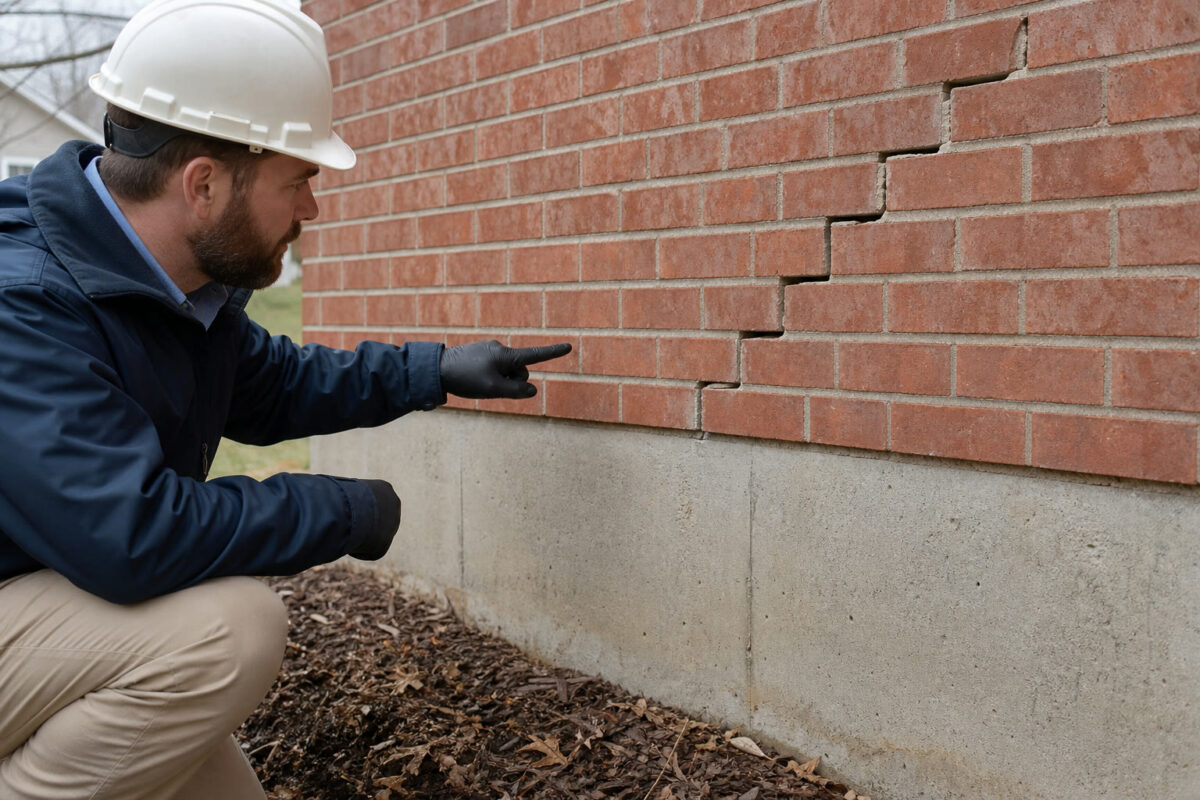
Brick veneer can crack for several reasons, so the pattern must be read with the building around it. Bentonville and Northwest Arkansas weather can move between wet and dry periods, so dated observations are valuable. Still, weather alone should not be blamed without checking how water moves across the lot, where the structure bears, and whether a plumbing or construction issue could also contribute.

A practical inspection sequence

Begin by making the area safe and recording what you see. Useful steps include: identify the pattern, check whether bricks are displaced, look at openings and the foundation below, compare dated photos. Take one close photo and one wider photo that shows location. Add a ruler only when it is safe and will not disturb the surface. Record the date, recent weather, and whether the symptom seems new or longstanding.

Next, walk outward from the symptom. Check the room or wall on both sides when accessible. Test nearby doors and windows without forcing them. Notice whether floors feel different across a doorway. Outside, look at downspouts, low spots, erosion, masonry joints, and the visible foundation line. In a basement or crawl space, limit observations to safe, accessible areas and do not enter where water, electricity, mold-like growth, pests, poor clearance, or unstable materials create a hazard.

How professionals separate cause from appearance

A qualified assessment should explain how the visible symptom relates to the support path of the building. For brick cracks structural Bentonville, that may include elevation readings, crack orientation and displacement, wall alignment, drainage observations, or accessible framing. The goal is to test a cause, not simply name a product.

Masonry repair lasts longer when the movement question is addressed before repointing or patching. Ask the evaluator to state what is known, what remains uncertain, and which measurements support the recommendation. A good scope also explains whether the goal is to monitor, control moisture, restore appearance, stabilize movement, or make a controlled correction. Those are different outcomes and should not be bundled into vague language.

Red flags that deserve prompt attention

Arrange a prompt evaluation when you observe bulging, loose masonry, widening steps, or matching interior symptoms. Other reasons to move quickly include a sudden change after an impact or plumbing event, loose masonry, a wall that appears unstable, water near electrical equipment, or a condition that creates a trip or access hazard. If there is an immediate threat to occupants, leave the affected area and contact the appropriate emergency service.

Do not make structural adjustments, excavate beside a suspect wall, cut major roots, or install improvised braces based on an online guide. These actions can shift loads, damage utilities, or make diagnosis harder. Safe documentation and a property-specific plan are the useful next steps.

Choosing the right scope without overbuying

Ask every contractor to connect the proposed work to the evidence. What symptom is the scope intended to change? How will the starting condition and result be measured? Does the work address water management, structural support, or only the surface? What access, restoration, and follow-up are included? Clear answers help property owners compare scopes without relying on a product name or sales claim.

The services listed on the Bentonville Foundation Repair homepage include options across structural repair, pier installation, leveling, lifting, commercial work, and waterproofing. That range does not mean every service belongs on every property. The assessment should narrow the choice to the condition that is actually documented.

Local prevention and monitoring

Keep gutters and visible drainage paths clear, and route roof runoff toward an appropriate discharge area rather than against the foundation. Avoid sudden, unplanned changes to grading or irrigation. Photograph known conditions from the same position after major seasonal changes. Save invoices, prior repair scopes, plumbing records, and renovation documents because they can explain when a symptom began.

Monitoring works best when it is consistent. Use the same reference points, write down dates, and compare the whole pattern rather than one line on a wall. If a symptom changes, share both the earlier and current records with the evaluator. That history can reduce guesswork and keep a minor finish issue from being mistaken for a structural problem, or vice versa.

Summary

  • For Bentonville property owners, stair-step, vertical, or separated brick and mortar joints deserves a documented, whole-building review before anyone chooses a repair. Start with safe observations, compare related symptoms, and use measurements and history to decide whether monitoring, moisture control, finish repair, stabilization, or another scope fits.
  • Document the condition with dated close and wide photos.
  • Check related floors, walls, openings, drainage, and accessible lower-level areas.
  • Promptly evaluate bulging, loose masonry, widening steps, or matching interior symptoms.
  • Choose a scope only after the recommendation is tied to measurements and a stated objective.

Frequently Asked Questions

What is the first thing to do about stair-step, vertical, or separated brick and mortar joints in Bentonville?

Document the condition with dated photos, keep the area safe, and note related changes. Then arrange a local foundation assessment if the condition is new, changing, displaced, wet, or paired with other symptoms.

Does stair-step, vertical, or separated brick and mortar joints always mean foundation repair is needed?

No. Similar symptoms can come from finishes, framing, drainage, moisture, or ordinary building movement. The pattern, measurements, history, and surrounding conditions determine whether structural work is appropriate.

What should a Bentonville foundation assessment check for this issue?

A useful assessment should connect the visible condition with floor or wall measurements, drainage, nearby openings, construction type, and history. Practical observations include: identify the pattern, check whether bricks are displaced, look at openings and the foundation below, compare dated photos.

When should a Bentonville homeowner treat the condition as urgent?

Seek prompt professional guidance when there is bulging, loose masonry, widening steps, or matching interior symptoms. Keep people away from visibly unstable areas and contact emergency services when there is an immediate life-safety hazard.

Can Bentonville Foundation Repair provide an estimate for brick cracks structural Bentonville?

The site invites Bentonville and Northwest Arkansas property owners to schedule a free estimate. Call 479-345-5120 or use the contact options on the Bentonville Foundation Repair homepage to discuss the property and next steps.

Request a Bentonville foundation assessment

If you want property-specific guidance, review the verified foundation repair and waterproofing services in Bentonville and call 479-345-5120. Describe when the condition appeared, where it is located, and whether it changes after rain or dry weather. The site currently offers a free estimate; confirm the scope and next steps directly for your property.

Frequently Asked Questions

What is the first thing to do about stair-step, vertical, or separated brick and mortar joints in Bentonville?

Document the condition with dated photos, keep the area safe, and note related changes. Then arrange a local foundation assessment if the condition is new, changing, displaced, wet, or paired with other symptoms.

Does stair-step, vertical, or separated brick and mortar joints always mean foundation repair is needed?

No. Similar symptoms can come from finishes, framing, drainage, moisture, or ordinary building movement. The pattern, measurements, history, and surrounding conditions determine whether structural work is appropriate.

What should a Bentonville foundation assessment check for this issue?

A useful assessment should connect the visible condition with floor or wall measurements, drainage, nearby openings, construction type, and history. Practical observations include: identify the pattern, check whether bricks are displaced, look at openings and the foundation below, compare dated photos.

When should a Bentonville homeowner treat the condition as urgent?

Seek prompt professional guidance when there is bulging, loose masonry, widening steps, or matching interior symptoms. Keep people away from visibly unstable areas and contact emergency services when there is an immediate life-safety hazard.

Can Bentonville Foundation Repair provide an estimate for brick cracks structural Bentonville?

The site invites Bentonville and Northwest Arkansas property owners to schedule a free estimate. Call 479-345-5120 or use the contact options on the Bentonville Foundation Repair homepage to discuss the property and next steps.

Categories
Structural & Cracked Wall Repair

When Does a Foundation Crack Need an Inspection in Bentonville?

Key Takeaways

  • Document a crack whose age, size, or cause is uncertain with dated photos.
  • Compare related symptoms before choosing a repair.
  • Use a property-specific assessment for the next step.

Short answer: For Bentonville property owners, a crack whose age, size, or cause is uncertain deserves a documented, whole-building review before anyone chooses a repair. Start with safe observations, compare related symptoms, and use measurements and history to decide whether monitoring, moisture control, finish repair, stabilization, or another scope fits. Bentonville Foundation Repair lists foundation repair, slab pier installation, commercial foundation repair, cracked wall and structural repair, house raising and lifting, basement waterproofing, house leveling, crawl space repair, and foundation piering among its services for Bentonville and Northwest Arkansas.

This guide focuses specifically on foundation crack inspection Bentonville. It is educational, not a diagnosis of a particular property. A crack, slope, moisture mark, or sticking opening has to be read in context. Construction type, age, drainage, previous alterations, utilities, and the direction and rate of change can all affect what the symptom means.

What this condition can tell you

The central observation is a crack whose age, size, or cause is uncertain. One isolated clue can be misleading. A better review looks for a pattern across the exterior foundation, interior walls, floors, windows and doors, basement or crawl space, and water-management features. If several clues point toward the same area, that evidence is more useful than a single cosmetic mark.

Width matters, but orientation, location, displacement, and change over time also matter. Bentonville and Northwest Arkansas weather can move between wet and dry periods, so dated observations are valuable. Still, weather alone should not be blamed without checking how water moves across the lot, where the structure bears, and whether a plumbing or construction issue could also contribute.

A practical inspection sequence

Begin by making the area safe and recording what you see. Useful steps include: photograph with scale, record the date, inspect both sides when accessible, note moisture and nearby movement. Take one close photo and one wider photo that shows location. Add a ruler only when it is safe and will not disturb the surface. Record the date, recent weather, and whether the symptom seems new or longstanding.

Next, walk outward from the symptom. Check the room or wall on both sides when accessible. Test nearby doors and windows without forcing them. Notice whether floors feel different across a doorway. Outside, look at downspouts, low spots, erosion, masonry joints, and the visible foundation line. In a basement or crawl space, limit observations to safe, accessible areas and do not enter where water, electricity, mold-like growth, pests, poor clearance, or unstable materials create a hazard.

How professionals separate cause from appearance

A qualified assessment should explain how the visible symptom relates to the support path of the building. For foundation crack inspection Bentonville, that may include elevation readings, crack orientation and displacement, wall alignment, drainage observations, or accessible framing. The goal is to test a cause, not simply name a product.

Prompt evaluation is especially sensible when a crack is active or paired with other structural clues. Ask the evaluator to state what is known, what remains uncertain, and which measurements support the recommendation. A good scope also explains whether the goal is to monitor, control moisture, restore appearance, stabilize movement, or make a controlled correction. Those are different outcomes and should not be bundled into vague language.

Red flags that deserve prompt attention

Arrange a prompt evaluation when you observe widening, horizontal movement, displacement, water entry, or related door and floor changes. Other reasons to move quickly include a sudden change after an impact or plumbing event, loose masonry, a wall that appears unstable, water near electrical equipment, or a condition that creates a trip or access hazard. If there is an immediate threat to occupants, leave the affected area and contact the appropriate emergency service.

Do not make structural adjustments, excavate beside a suspect wall, cut major roots, or install improvised braces based on an online guide. These actions can shift loads, damage utilities, or make diagnosis harder. Safe documentation and a property-specific plan are the useful next steps.

Choosing the right scope without overbuying

Ask every contractor to connect the proposed work to the evidence. What symptom is the scope intended to change? How will the starting condition and result be measured? Does the work address water management, structural support, or only the surface? What access, restoration, and follow-up are included? Clear answers help property owners compare scopes without relying on a product name or sales claim.

The services listed on the Bentonville Foundation Repair homepage include options across structural repair, pier installation, leveling, lifting, commercial work, and waterproofing. That range does not mean every service belongs on every property. The assessment should narrow the choice to the condition that is actually documented.

Local prevention and monitoring

Keep gutters and visible drainage paths clear, and route roof runoff toward an appropriate discharge area rather than against the foundation. Avoid sudden, unplanned changes to grading or irrigation. Photograph known conditions from the same position after major seasonal changes. Save invoices, prior repair scopes, plumbing records, and renovation documents because they can explain when a symptom began.

Monitoring works best when it is consistent. Use the same reference points, write down dates, and compare the whole pattern rather than one line on a wall. If a symptom changes, share both the earlier and current records with the evaluator. That history can reduce guesswork and keep a minor finish issue from being mistaken for a structural problem, or vice versa.

Summary

  • For Bentonville property owners, a crack whose age, size, or cause is uncertain deserves a documented, whole-building review before anyone chooses a repair. Start with safe observations, compare related symptoms, and use measurements and history to decide whether monitoring, moisture control, finish repair, stabilization, or another scope fits.
  • Document the condition with dated close and wide photos.
  • Check related floors, walls, openings, drainage, and accessible lower-level areas.
  • Promptly evaluate widening, horizontal movement, displacement, water entry, or related door and floor changes.
  • Choose a scope only after the recommendation is tied to measurements and a stated objective.

Frequently Asked Questions

What is the first thing to do about a crack whose age, size, or cause is uncertain in Bentonville?

Document the condition with dated photos, keep the area safe, and note related changes. Then arrange a local foundation assessment if the condition is new, changing, displaced, wet, or paired with other symptoms.

Does a crack whose age, size, or cause is uncertain always mean foundation repair is needed?

No. Similar symptoms can come from finishes, framing, drainage, moisture, or ordinary building movement. The pattern, measurements, history, and surrounding conditions determine whether structural work is appropriate.

What should a Bentonville foundation assessment check for this issue?

A useful assessment should connect the visible condition with floor or wall measurements, drainage, nearby openings, construction type, and history. Practical observations include: photograph with scale, record the date, inspect both sides when accessible, note moisture and nearby movement.

When should a Bentonville homeowner treat the condition as urgent?

Seek prompt professional guidance when there is widening, horizontal movement, displacement, water entry, or related door and floor changes. Keep people away from visibly unstable areas and contact emergency services when there is an immediate life-safety hazard.

Can Bentonville Foundation Repair provide an estimate for foundation crack inspection Bentonville?

The site invites Bentonville and Northwest Arkansas property owners to schedule a free estimate. Call 479-345-5120 or use the contact options on the Bentonville Foundation Repair homepage to discuss the property and next steps.

Request a Bentonville foundation assessment

If you want property-specific guidance, review the verified foundation repair and waterproofing services in Bentonville and call 479-345-5120. Describe when the condition appeared, where it is located, and whether it changes after rain or dry weather. The site currently offers a free estimate; confirm the scope and next steps directly for your property.

Frequently Asked Questions

What is the first thing to do about a crack whose age, size, or cause is uncertain in Bentonville?

Document the condition with dated photos, keep the area safe, and note related changes. Then arrange a local foundation assessment if the condition is new, changing, displaced, wet, or paired with other symptoms.

Does a crack whose age, size, or cause is uncertain always mean foundation repair is needed?

No. Similar symptoms can come from finishes, framing, drainage, moisture, or ordinary building movement. The pattern, measurements, history, and surrounding conditions determine whether structural work is appropriate.

What should a Bentonville foundation assessment check for this issue?

A useful assessment should connect the visible condition with floor or wall measurements, drainage, nearby openings, construction type, and history. Practical observations include: photograph with scale, record the date, inspect both sides when accessible, note moisture and nearby movement.

When should a Bentonville homeowner treat the condition as urgent?

Seek prompt professional guidance when there is widening, horizontal movement, displacement, water entry, or related door and floor changes. Keep people away from visibly unstable areas and contact emergency services when there is an immediate life-safety hazard.

Can Bentonville Foundation Repair provide an estimate for foundation crack inspection Bentonville?

The site invites Bentonville and Northwest Arkansas property owners to schedule a free estimate. Call 479-345-5120 or use the contact options on the Bentonville Foundation Repair homepage to discuss the property and next steps.